

Understanding Google Ranking Opportunities
Do you go past the first page of a Google search? If you don't, you're not alone. That is correct! To get the traffic and clicks that will help your business grow, you need to be on page one of SERPs (search engine results pages).
This may seem obvious, but with so many businesses competing for the top spot, it can feel impossible to achieve those coveted top positions.
So, how do you go about doing it? Understanding the ranking opportunities available on page one is a great place to start!
SERP 101: An Introduction to Search Engine Results Pages
The internet contains millions of pages, but none are more important to digital marketers than search engine results pages, or SERPs.
Search engine optimization specialists and PPC advertisers compete for the same valuable real estate in the most prominent parts of the SERPs, but competition is fierce, and technological advances in search mean that digital marketers need to know how search works and what they can do to maximize their visibility more than ever.
What Are Search Engine Results Pages and How Do They Work?
Search engine results pages are web pages that are served to users when they use a search engine, such as Google, to look for something online. The user types in their search query (often using specific terms and phrases known as keywords), and the search engine returns a SERP.
Every SERP is distinct, even when performed on the same search engine with the same keywords or search queries. This is because virtually all search engines personalise their users' experiences by presenting results based on factors other than their search terms, such as the user's physical location, browsing history, and social settings. Two SERPs may appear identical and contain many of the same results, but they frequently differ in subtle ways.
The look of search engine results pages is constantly changing as a result of experiments conducted by Google, Bing, and other search engine providers in order to provide their users with a more intuitive, responsive experience. This, combined with emerging and rapidly developing search technologies, means that today's SERPs look very different from their predecessors.
Organic Results
SERPs typically include two types of content: "organic" and paid results. Organic results are web page listings that appear as a result of a search engine's algorithm (more on this shortly). Search engine optimization professionals specialize in optimizing web content and websites to rank higher in organic search results.
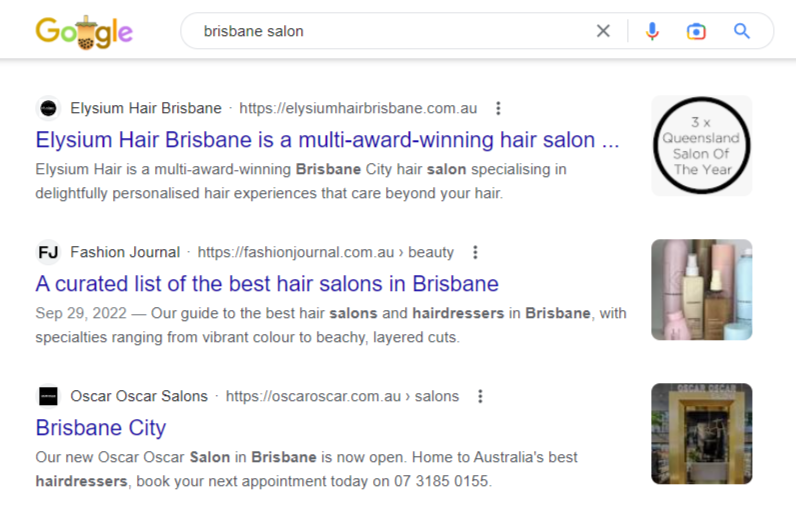
Organic Results on the SERP
Knowledge Graph
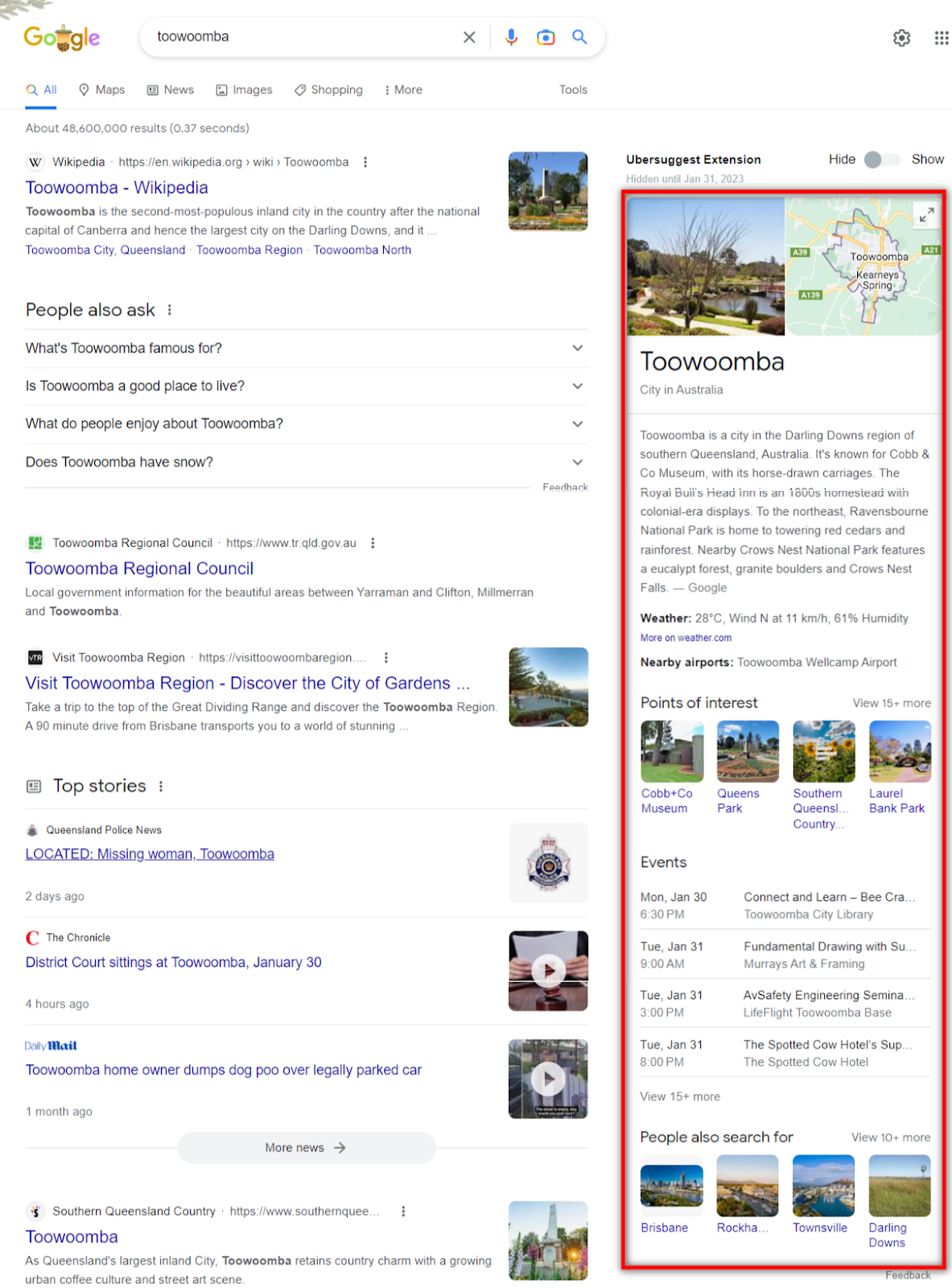
Knowledge Graph on the Google SERP
The Knowledge Graph is the box on the right side of this SERP (also sometimes called the Knowledge Box). This is a Google feature introduced in 2012 that pulls data on frequently asked questions from sources all over the web to provide concise answers in one central location on the SERP.
Some SERPs, such as the one shown above, will have significantly more organic results than others. This is because the intent of various searches varies. There are three types of Internet searches:
- Informational
- Navigational
- Transactional
Informational searches are those in which the user wishes to learn more about a specific topic, such as Abraham Lincoln. Ads or other types of paid results would make little sense on this SERP because the search query "Abraham Lincoln" has very low commercial intent; the vast majority of searchers using this search query are not looking to buy anything, so only informational results are displayed on the SERP.
Navigational searches are those in which the user wishes to find a specific website via their search. This could be the case for people looking for a specific website, trying to find a website whose URL they can't remember or any other type of navigational goal.
Finally, transactional searches are those that are most likely to yield paid results on the SERP. Transactional searches have a high level of commercial intent, and search queries that lead to transactional SERPs may include keywords like "buy" and other terms that indicate a strong desire to make a purchase.
Paid Search Results
Paid results, as opposed to organic results, are those that have been paid to be displayed by an advertiser. Previously, paid results were almost entirely limited to small, text-based ads that appeared above and to the right of organic results. Paid results, on the other hand, can now take a variety of forms, and there are dozens of advertising formats available to meet the needs of advertisers.
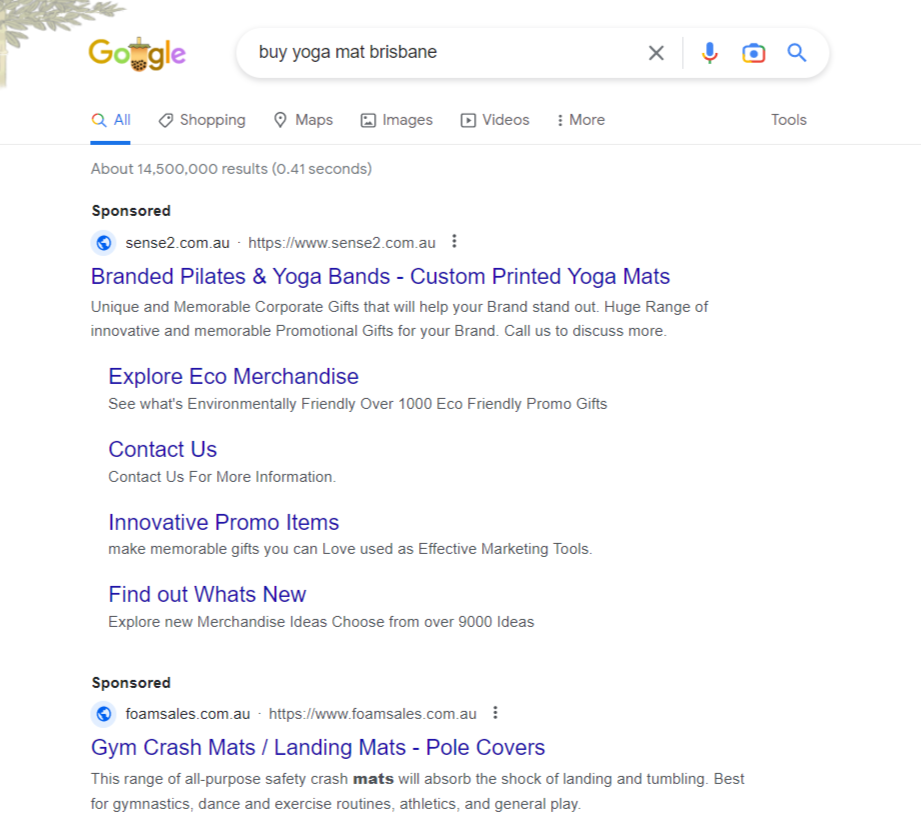
Some Paid Results on the Google SERP
In the preceding example (a SERP for the search query "buy yoga mat brisbane"), all of the results on the SERP are paid. The top ads (sense2.com.au) had ad extensions that allow prospective customers to navigate directly to specific pages on their websites from the ads while formsales.com.au has no extensions.
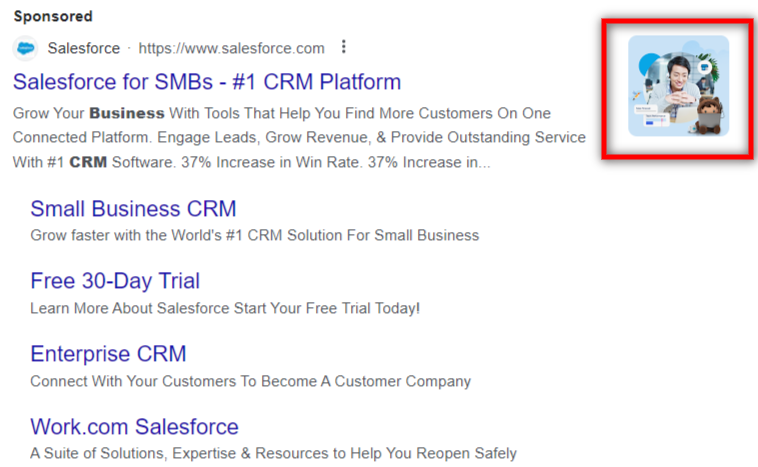
The image-based ads on the right side of the page are Shopping ads, a feature of the Google Ads platform that displays e-commerce retailers' product information alongside other SERP results. Shopping ads can include a variety of information, such as product availability, user reviews, special offers, and other details.
The only results on this SERP that are not explicitly paid are the map and business listing. This map is displayed based on the user's location, and it includes listings for local businesses that have created a free Google My Business listing. Google My Business is a free company directory that can help smaller local businesses increase their visibility to searchers based on geolocation, which is especially important on mobile.
Search Algorithms and Ranking Signals
Organic results are listings that the search engine has indexed based on a variety of factors, also known as "ranking signals."
For example, Google's search algorithm has hundreds of ranking factors, and while no one outside of Google knows what they are, some are thought to be more important than others. Previously, a site's link profile - the number of external links from other websites that link to a specific website or web page - was an important ranking signal. To some extent, it still is (which is why Wikipedia ranks so prominently in organic results for so many queries), but search advances at such a rapid pace that ranking signals that were once critical to the search algorithm may be less important today, causing SEOs constant frustration.
Search Engine Marketing
Search engine optimization, as the name implies, is the practice of optimizing websites and web pages for discovery in search engines and, as a result, for more visible placement on search engine results pages. This is accomplished through a variety of techniques, ranging from "on-page" SEO to "off-page" techniques.
SEO On-Page
On-page SEO refers to best practices that website owners and web content creators can use to make their content as easily discoverable as possible. This includes, among other things, creating detailed page metadata (data about data) for each page and element such as images, using unique, static URLs, including keywords in relevant headings and
subheadings, and using clean HTML code.
SEO Off-Page
Off-page SEO techniques, as opposed to on-page SEO techniques, refer to strategies that affect the entire site. Link building and exchange, social bookmarking, content marketing, submissions to directories and search engine indexes, and the creation of online communities on social media are all common off-page SEO techniques.
Although the full scope of SEO is far too broad to cover comprehensively here, all you need to know is that SEO is primarily concerned with achieving higher organic rankings. Businesses may hire an agency or SEO professional to perform their SEO work, but no money is exchanged and all emphasis is placed on ranking higher in organic search.
Paid Search and Search Engine Results Pages
Pay-per-click marketing, as opposed to SEO, focuses solely on the investment of advertising budget in order to achieve prominent positioning on search engine results pages. However, simply throwing more money at a campaign is not enough; advertisers must think strategically in order to achieve their objectives.
Paid search works like an auction. Advertisers bid on keywords related to their business in order for their ads to appear when users search for those terms. A variety of factors influence where an ad appears on the SERP. Some advertisements may appear above the organic search results. Some advertisers limit the display of their ads to mobile searches only, while others completely exclude mobile results. Some advertisements include extensions, while others do not.
Paid search, like SEO, is a complex topic, but for now, just remember that paid search focuses on optimizing ads to appear in the most prominent position on the SERP.
Top 10 SERP Elements
There are currently over 40 SERP features, with many focusing on specific verticals. The ten most common SERP features, on the other hand, are:
1. Featured Snippet
These outperform organic results in terms of click-through rate (CTR). Google responds to a query within the SERP.
2. Site Links
These are additional links that appear beneath the main organic listing and are typically deep links.
3. Top Stories/News
Shows timely news stories directly in the SERP.
4. Image Pack
Google displays a row of images before redirecting you to Google Images. So, if you rank first in an image search, you may appear in the SERP's image pack. Images may appear in any natural position.
5. Knowledge Graph/Knowledge Graph
Information that appears within a box or panel on the right-hand side of the SERP.
6. Tweets
Since 2015, Google has displayed relevant tweets in the SERPs.
7. Video
Video, particularly YouTube videos, can appear in the SERPs. To have a chance of appearing, you must use video schema mark-up.
8. People Also Ask
These are questions related to the search query; they are very common about halfway down the SERP.
9. Local Map Pack
Google will display three locations that match the search query for local search queries. These are especially prevalent on mobile. So, if you have a physical location, ranking in the top three is critical.
10. Carousel
Google displays various types of carousels, which the searcher can scroll through by using the arrow. Google displays the carousel for entertainment queries such as '2020 films.'
Control the SERP
BizzDesign recognizes the significance of the Universal SERP; all digital marketing campaigns track the universal SERP page, and the digital strategy considers the mix of SERP features for each client vertical.
Do you want your ads to appear at the top of the SERP? Learn more about how we can assist you.